
Shows how the vehicle performs before tuning and whether there are obvious problems.
Dyno Guide
Custom dyno tuning explained.
A dyno is not just for a final power graph. Used properly, it lets the tuner test load, boost, fuelling, torque delivery and temperature in a controlled way.
Process
Why dyno testing can matter.
Custom dyno tuning gives the tuner a controlled environment to see how the vehicle responds. That does not mean every car needs a long dyno session, but it does mean the tuner has a way to prove the calibration rather than relying only on a generic file and a short drive.
The dyno can reveal boost leaks, clutch slip, airflow limits, heat issues, weak ignition components and torque delivery problems. Those discoveries can be frustrating for a customer, but they are better found during controlled testing than after repeated hard driving on the road.
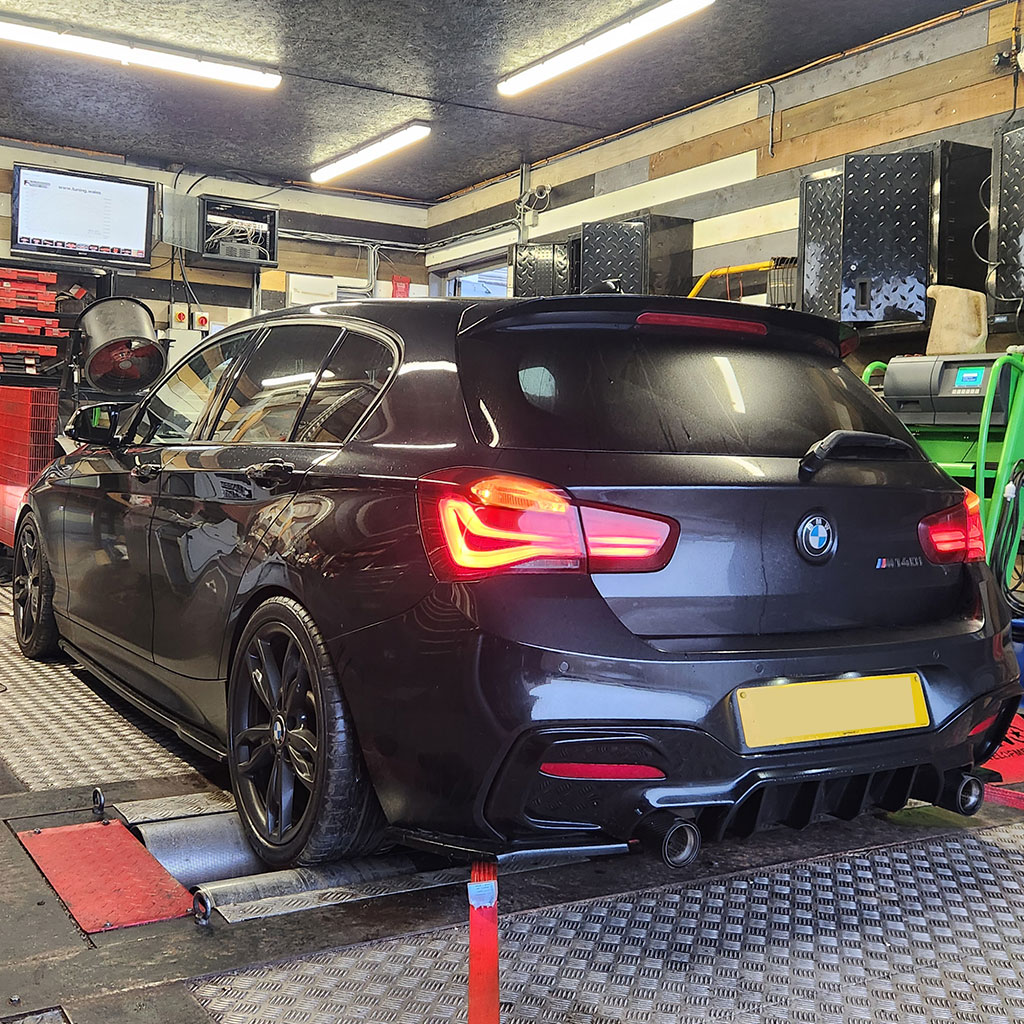
Tracks boost, fuelling, temperatures, torque requests and safety limits.
The map can be adjusted around the actual vehicle rather than a generic assumption.
The tuner can stop or reduce targets if the data suggests the car is not happy.
The customer gets a clearer explanation of what changed and why.
Bad previous maps, smoke, limp mode and weak hardware can be investigated more carefully.