
Ask whether your actual vehicle will be tested on a dyno or whether the file was only developed on another car.
Dyno Claims
Fake dyno claims in car tuning.
Terms like dyno proven and custom to your vehicle are used everywhere in tuning. They sound reassuring, but they do not always mean what customers think they mean.
Dyno language can be useful, but it can also be vague. A dyno is a controlled testing tool; the important question is whether it was used to verify the vehicle in front of the tuner.
Understanding that distinction helps drivers separate evidence from marketing language. A claim may be technically true while still not meaning the exact thing a customer assumes.
What Is A Dyno?
Why controlled testing matters.
A dynamometer, usually shortened to dyno, is used to measure a vehicle's power output under controlled conditions. It allows a tuner to measure horsepower and torque, monitor air-fuel ratios, watch boost levels, adjust calibration and verify the result on that specific vehicle.
When used properly, dyno testing provides evidence-based tuning rather than relying on assumptions. It can show whether the car is responding cleanly, whether the result is repeatable and whether a fault is appearing under load.
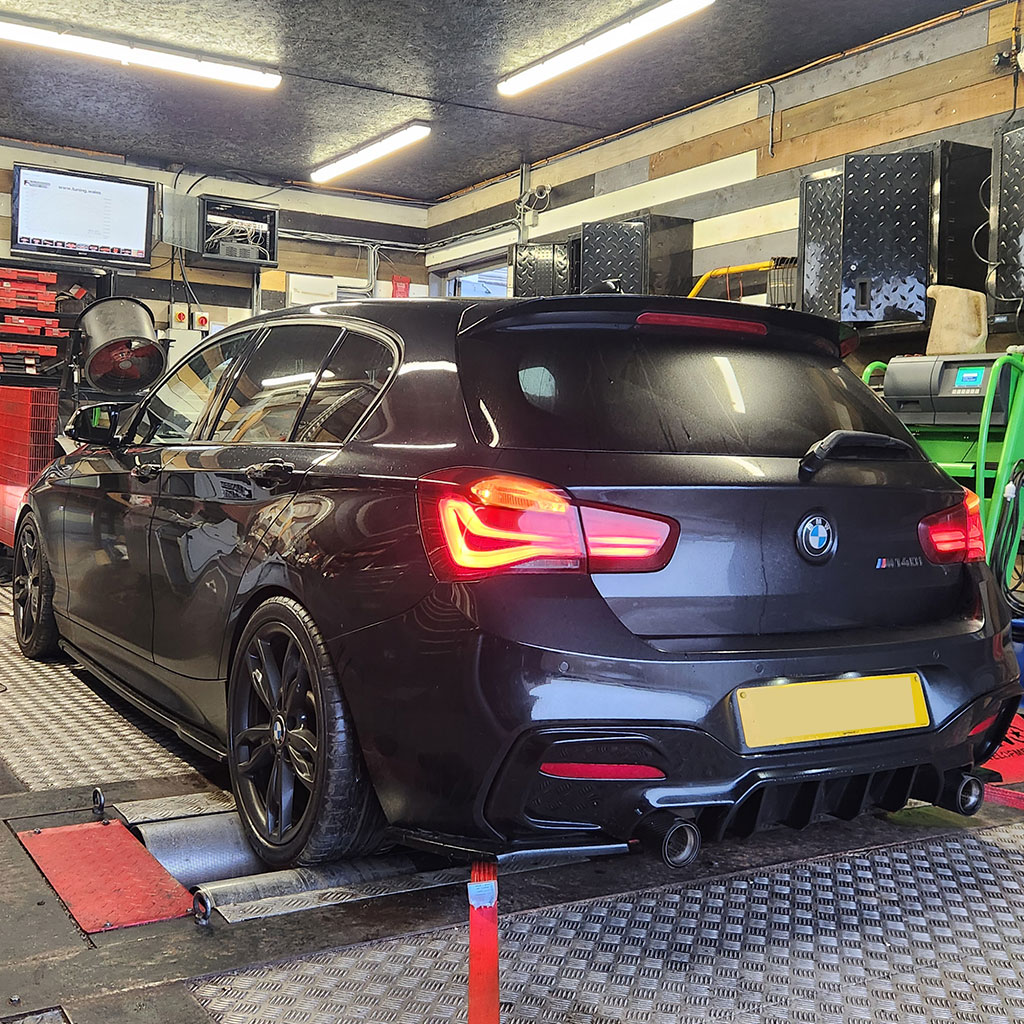
Dyno Proven
What does dyno proven actually mean?
The phrase dyno proven is often misunderstood. In some cases, it may simply mean a file was developed on a dyno at some point in the past, then reused across multiple vehicles.
That can provide a baseline, but it does not guarantee the calibration has been tested or validated on your specific car. Every vehicle is different. Engine condition, fuel quality, hardware modifications, mileage and wear can all affect how a car responds to tuning.
A file that worked well on one car may not be ideal for another car with tired sensors, a weak clutch, injector correction issues, a boost leak or different supporting hardware.
Can a map be dyno proven if it was never tested on your car?
Yes, the phrase can be used that way in the market. It may mean the file, or a version of it, was developed on a dyno previously. That is different from saying the final calibration was tested and verified on your own vehicle.
A practical example is a file developed on a clean, healthy car months earlier, then applied to another car of the same model. That previous dyno work may be useful, but it does not prove how your car responded today. Vehicle-specific validation means checking the actual car under load and using its data to confirm or adjust the result.
Custom Claims
How custom to your car is sometimes used loosely.
A common claim is that a map is custom to your car, even when no live testing is carried out. In reality, true custom calibration usually involves reading live data from the vehicle, making adjustments based on measured values and verifying performance and safety under load.
Without that process, a file is usually pre-developed, even if it is adjusted slightly for the vehicle. That does not automatically make it bad, but it is important to understand the difference between a tuned file and a validated result.
Why This Matters
Untested calibrations can hide problems.
Using a calibration that has not been tested on the vehicle itself can lead to inconsistent performance, undetected fuelling or boost issues and increased stress on components. In many cases, problems only become apparent after the vehicle is driven hard or used for a few days.
That is why proper validation matters. A tuner should be able to explain whether the car was tested, what data was checked and whether the final result was verified on the actual vehicle.
Questions to ask before paying for a dyno proven remap.
Before paying, ask practical questions that separate a marketing phrase from a tested result.
Ask whether boost, fuelling, temperatures, torque behaviour or other measured values are reviewed from your vehicle.
Ask whether the final calibration is checked after changes are made, rather than simply loaded and handed back.
Ask whether you receive a dyno graph, log, printout or written explanation showing what was checked.
Different Approaches
Pre-developed files and vehicle-specific calibration are not the same thing.
Created in advance, applied to multiple vehicles and sometimes based on dyno testing from other cars.
Developed or adjusted using data from the individual vehicle, often with testing and validation under load.
The important question is whether the result was checked on your car rather than assumed from another car.
Final Thoughts
The key difference is proof on the actual car.
Terms like dyno proven and custom tuning can mean different things depending on how they are used. The key difference is whether the results have been verified on your vehicle, rather than assumed based on previous testing.
Taking the time to understand how a tuner works can help you make a more informed decision and avoid confusion around what is being offered. For the wider buying checklist, read how to choose a car tuner.
FAQ
Quick answers about dyno claims.
What does dyno proven mean?
It can mean the file was developed on a dyno at some point, but it does not always mean your specific car has been tested and validated.
Can a remap be custom without live testing?
A file can be adjusted without live testing, but true vehicle-specific calibration usually involves measured data and verification under load.
Why does dyno validation matter?
Validation can reveal boost, fuelling, clutch, sensor or temperature issues that may not be obvious during normal driving.
Are pre-developed files always bad?
No. They can work on simple healthy vehicles. The issue is when they are presented as full custom tuning without testing on the actual car.