
Extra torque can reveal a clutch that was already close to slipping. This is common on high-mileage cars or vehicles that have already been tuned.
Dyno Failures
Dyno failures: what a rolling road can reveal.
A dyno puts a vehicle under controlled load. That can reveal weaknesses that were already present but not obvious during gentle road driving.
Risk and Reality
Why cars sometimes fail on a dyno.
A dynamometer is a test tool. Used properly, it helps a tuner see what the engine, turbo, clutch, gearbox, fuelling and cooling system are doing under repeatable load. It is useful because it can create consistent conditions that are difficult to judge from a short road drive.
If a component is already weak, the dyno may reveal it earlier than normal driving would. That can make it feel as though the dyno caused the issue, when the real cause may be wear, heat, poor servicing, previous tuning, existing faults or hardware already near its limit.
This is why dyno-failure searches need context. A failure during testing is not automatically proof that the test was careless, and it is not automatically proof that the vehicle was already faulty. The useful question is what was checked beforehand, what the data showed and whether the run was stopped at the right time.
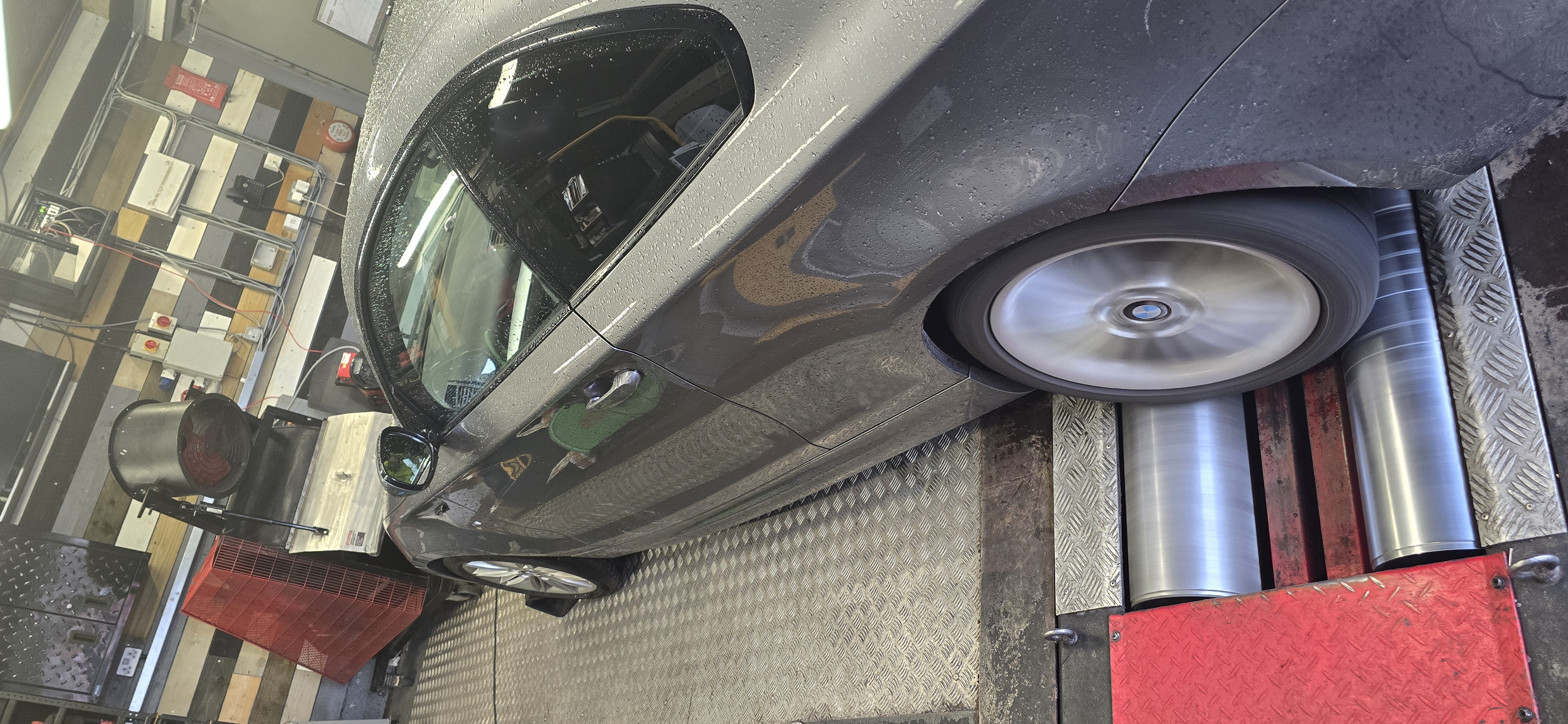
Hidden Weaknesses
What the dyno may reveal that the road hides.
Gentle road driving may not show a small boost leak, weak ignition component, slipping clutch or cooling issue. Under controlled load, those weaknesses become easier to see because the vehicle is asked to hold torque, boost and temperature in a repeatable way.
A car can feel acceptable during part-throttle driving but behave very differently when the engine is asked to make sustained load. That is particularly true for turbocharged vehicles, high-mileage diesels, cars with previous remaps and modified vehicles with unknown supporting hardware.
This is one reason dyno testing is valuable. It can show that a vehicle should be repaired, detuned or stopped before a bigger problem develops on the road. The purpose is not only to measure power; it is to understand whether the vehicle is responding safely.
Weak Points
Common weak points: clutch, boost leaks, fuelling, ignition, cooling.
Small leaks may only become obvious when the turbo is asked to hold target boost under load.
Injector, pump or mixture issues can appear when demand increases and the fuel system is no longer operating in an easy range.
Petrol cars can show misfire under load from tired plugs, weak coils, heat or incorrect spark behaviour.
Weak cooling systems can struggle when the vehicle is repeatedly loaded, especially if airflow, coolant condition or radiator efficiency is poor.
Unknown files can hide fault codes, request unrealistic torque or make diagnosis harder before a safe baseline is restored.
Examples
Petrol example: misfire under load.
A petrol turbo car may arrive with no warning light and feel fine during light road use. On the dyno, once boost and cylinder pressure rise, it may begin to misfire. The issue could be spark plugs, coils, fuel quality, injector behaviour, heat or previous calibration. A responsible tuner should stop and investigate rather than keep chasing a power figure.
Diesel example: clutch slip or smoke.
A diesel may drive normally around town but show clutch slip, smoke, DPF pressure or boost deviation once torque is requested under load. This can happen when the clutch is already worn, the DPF is restricted, injectors are uneven, or previous software has masked a fault. The dyno has made the weakness visible; it has not necessarily created it.
Blame and Evidence
Why a dyno run is sometimes blamed for an existing weakness.
When a fault appears during testing, it is easy to connect the fault with the test. That is understandable from the driver's point of view. The car may have arrived driving normally and then left with a visible problem. But a controlled load test can expose a weakness that was already developing quietly.
The evidence matters. Stored fault codes, live data, temperatures, boost behaviour, clutch slip, smoke levels and the vehicle's previous history all help explain whether the failure was a new event, an existing weakness, a previous-work issue or a calibration concern.
Good communication matters too. A customer should understand what happened, why the run was stopped, what evidence was seen and what the next safe step should be. That may mean repair before tuning, a lower target, further diagnostics or no tune at all.
When a dyno run should be stopped.
A run should be stopped if temperatures rise too far, fuelling looks unsafe, boost control is unstable, clutch slip appears, smoke is excessive, a misfire develops or the vehicle behaves in a way that suggests continuing would be unreasonable.
Responsible stopping can disappoint a customer who expected a result that day, but it is part of protecting the vehicle. The buyer takeaway is to view dyno testing as evidence. It does not remove all risk from a used car, but it can reveal risk in a controlled environment before that risk becomes a road problem.
For related reading, see custom dyno tuning vs generic remaps, what dyno proven really means and how to choose a tuner.
FAQ
Dyno failure questions.
Can a dyno damage a car?
A dyno places the car under load, so a weak vehicle can fail during testing. The cause may be the existing condition of the vehicle, the calibration, previous work or how the test was handled.
Why do clutches slip on dynos?
A dyno can reveal clutch slip because the car is asked to hold torque under controlled load. A clutch that feels fine in gentle driving can slip when torque demand rises.
Should a tuner stop a dyno run?
Yes. If data, temperature, smoke, misfire, boost or clutch behaviour looks unsafe, stopping is the responsible decision.
What should be checked first?
Fault codes, fluids, tyres, visible leaks, cooling airflow, vehicle history and basic suitability should be checked before loaded testing.